Pumping gas at a station just off I-40 somewhere in Arizona, a man wearing a dark, wrinkled uniform approached me. The wind blowing his ruffled hair, he carried a rubber boot with a few dollar bills sticking out. Standing a little too close for my comfort, he dangled the boot toward me and asked, “Would you like to donate to the firefighters’ fund?” I replied, “Do you have some kind of identification?”
The man gave me a puzzled look, “no, not really ID, but there’s my fire truck parked right over there.” Sure enough, there it was. Huge, red, shiny, a fire truck that awed.
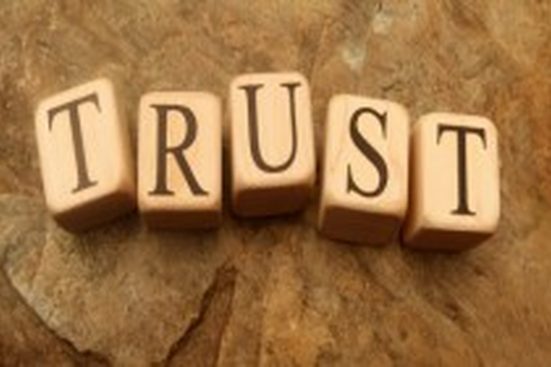
The overwhelming majority of people in the U.S. believe that other people cannot be trusted.
According to the lastest General Social Survey,* two-thirds of Americans say “you can’t be too careful” in dealing with other people. Mr. Arizona Firefighter met one of the majority when he came face-to-face with me.
The GSS was first conducted in 1972. At that time, 50% of adult Americans said that people can be trusted. Forty years later, not only do people in the U.S. distrust the government (except perhaps their local government), we’ve gained a hard-earned mistrust of institutions like Wall Street, banks, law enforcement agencies, schools and churches. That distrust spread: most of us ordinary residents, Main Streeters, don’t trust one another anymore either.
Perhaps because I was raised in a tiny heartland town or simply possessed the naiveté of youth, I used to have a high degree of trust in other people. In law school I remember being shocked by Professor Berger’s advice:
Trust no one, sue everyone.”
He was joking, or at least I think he was, yet that advice stuck with me much longer than Intro to Property Law. Today, Berger’s ‘trust no one’ seems to have seeped into the American water supply. Obviously, I’ve drunk deeply from that well.
I suspect the trust deficit in the U.S. harms us all in a myriad of ways. Widespread distrust likely curtails our ability to solve problems. Distrust definitely seems to breed incivility. Without trust, I know from personal experience that engaging in productive dialogue is darned near impossible. On a societal scale, distrust compels us to hunker down with our tribe: people who look like, sound like, and earn like us.
How might the U.S. begin reversing our distrust trend? The great South African President Nelson Mandela’s approach to trust-building offers us a simple framework to start…
Lead Forgiveness as Individuals
Mandela made crystal clear that as an individual, forgiveness guided him. He spoke about forgiveness, he acted in forgiving ways. As a leader, he went further by articulating his expectation that others forgive too.
Ghana’s President John Dramami Mahama reflected upon Mandela’s forgiveness expectations:
We all waited for an indescribable rage, a call for retribution that any reasonable mind would have understood… Yet, the man insisted on forgiveness. ‘To go to prison because of your convictions, he said, ‘and be prepared to suffer for what you believe in, is something worthwhile. It is an achievement for a man to do his duty on earth irrespective of the consequences.'”**
What might happen if our leaders, if each of us, spoke and acted and expected forgiveness of one another?
Lead by Establishing a Structure for Truth-Telling & Healing
Mandela’s use of the Truth and Reconciliation Commission exposed governmental and individual wrongdoing that started the national healing process. Many other nations have used restorative justice truth commissions successfully, including our neighbor to the north, Canada.
Imagine, if rather than unproductive U.S. Congressional hearings, lawsuits, or the expenditure of resources on individual prosecutions, we employed a Truth and Reconciliation process, a restorative justice process for select issues. Perhaps this kind of process could begin to rebuild trust? Imagine a Truth & Reconcilition process for, oh, say, WMDs in Iraq?
What would you establish a local healing process around? What’s stopping you?
Lead: Get Out & Smile
We are all familiar with Mandela’s gorgeous smile, his ability to go out among the people and interact with humility, love and humor — that built trust.
Hmm, I’ve become pretty frowny myself. I call it my “lawyer face.” Sometimes that face is appropriate but more often than not, I catch myself feeling joyful when smiling and watch how contagious my own smile can be.
What might happen if we all made it a point to get out and smile more?
Might we benefit individually and collectively by getting out from behind our computers and TVs, looking up from our smart phones, taking public transportation or going to public parks and public meetings? What a great trust-building start!
If you’ve got ideas for me and for America, I’d love to hear them and share them. I’m putting on my “non-lawyer face” this moment, dear readers, and getting away from this desk to go out and smile!
#PeaceHugs, Jone
*Access the Associated Press/GfK Communications General Social Survey at http://ap-gfkpoll.com/main/wp-content/uploads/2013/11/AP-GfK-October-2013-Poll-Topline-Final_TRUST.pdf .
**Mandela Taught A Continent to Forgive at
http://www.nytimes.com/2013/12/06/opinion/mahama-mandela-taught-a-continent-to-forgive.html?_r=0
.
Note: an iteration of this post appeared on December 9, 2013, inCourage Reflections. I found myself a bit frosty recently and hope you don’t mind me refreshing my memory and my intentions by sharing this again.